
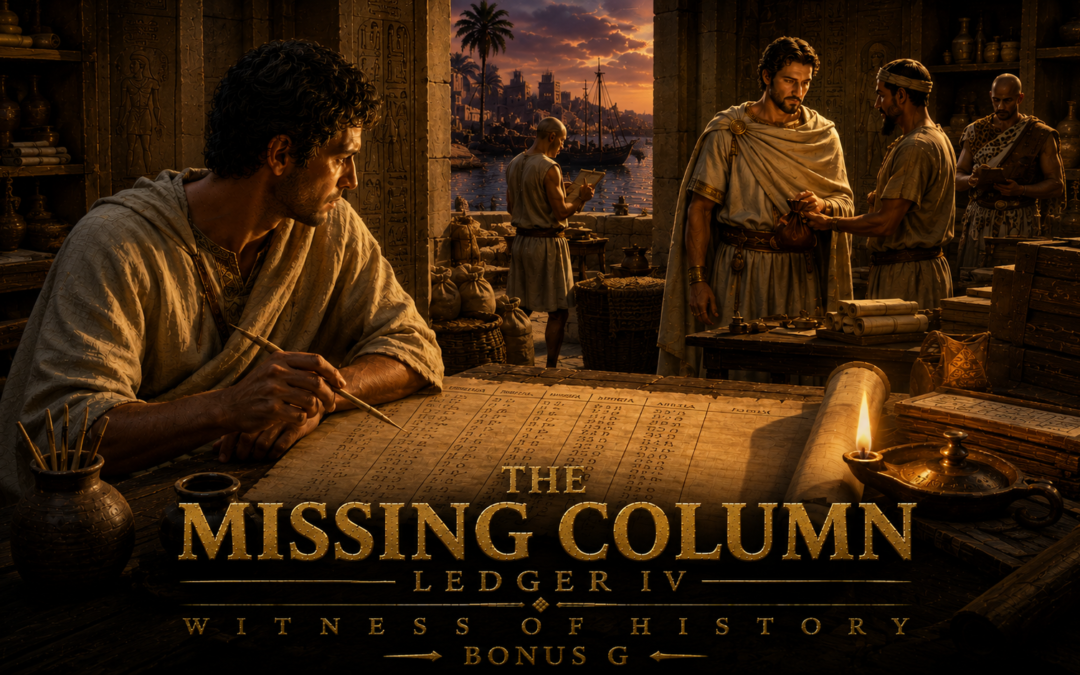
What did corruption look like inside Alexander the Great’s new empire? Through the eyes of a royal treasury clerk in Egypt, follow the rise of Cleomenes of Naucratis and uncover the uncomfortable gap between official accounts and what ordinary people actually paid. This immersive historical podcast explores taxation, administration, extortion, and the hidden costs of empire—asking what happens when every ledger balances, but the system itself is corrupt.
Narrator: Menon, Clerk of the Royal Treasury
Setting: Egypt, 332–331 BCE
1. Historical Sources
a. Ancient Sources
- Arrian, Anabasis of Alexander
- Diodorus Siculus, Library of History
- Quintus Curtius Rufus, Histories of Alexander
b. Modern Sources
- Peter Green, Alexander of Macedon
- Philip Freeman, Alexander the Great
- Adrian Goldsworthy, Philip and Alexander
2. Historical Facts
- Egypt surrendered peacefully under Mazaces.
- Alexander retained most of the existing Egyptian administrative system.
- Authority was divided among civil, military, naval, and financial officials.
- Cleomenes of Naucratis was entrusted with major fiscal responsibilities.
- Ancient sources accuse Cleomenes of extortion, blackmail, grain profiteering, and enriching himself while administering Egypt.
- Peter Green argues that Alexander tolerated Cleomenes because he remained effective and loyal, while ensuring substantial revenues reached the royal treasury.
3. Reconstructed
- Menon as narrator.
- His investigation into complaints against Cleomenes.
- The merchants, priests, farmers, and officials who speak with him.
- The concept of the "second tax" and the "missing column."
- Menon's reflections and philosophical conclusions.
4. Author's Note
Ledger IV explores one of the most uncomfortable questions in Alexander's administration. Egypt's government functioned efficiently, the royal treasury prospered, and yet contemporary tradition portrays Cleomenes as enriching himself through coercive practices.
The "second tax" is a literary reconstruction inspired by those accounts. It represents the unofficial payments and burdens that never appeared in the royal records but, according to the ancient tradition, were part of how Cleomenes accumulated his extraordinary wealth.
The episode asks a timeless question:
What truths about government never make it into the official record?