
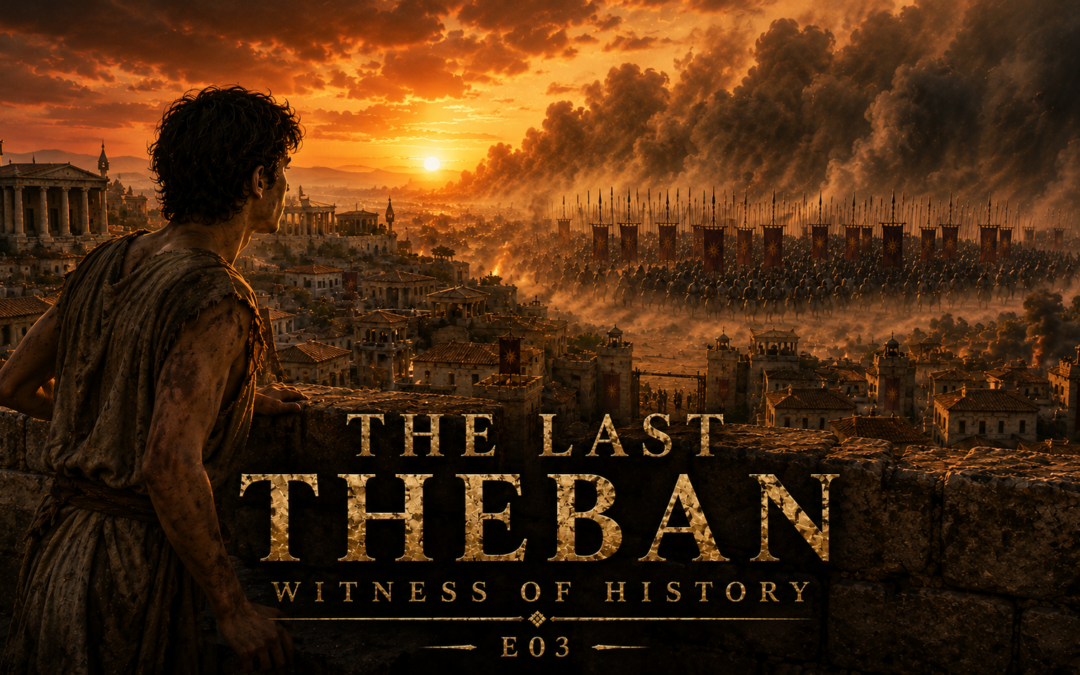
How did Alexander the Great treat Thebes after they rebelled after the assassination of Philip II. Through the eyes of a 17 year old Theban how they learned about Alexander's death before they discovered it was a rumor and how Alexander crossed Greece quickly from the North to Thebes and treated Thebes. An Immersive story by this apprentice potter based on historical facts.
Narrator: A 17-year-old Theban Apprentice Potter
Setting: Thebes, 335 BCE
1. Historical Sources
a. Ancient Sources
- Arrian, Anabasis of Alexander
- Diodorus Siculus, Library of History
- Plutarch, Life of Alexander
- Justin, Epitome of Pompeius Trogus
b. Modern Sources
- Adrian Goldsworthy, Philip and Alexander
- Peter Green, Alexander of Macedon, 356–323 BC
- Philip Freeman, Alexander the Great
- Robin Lane Fox, Alexander the Great
- James Romm (ed.), The Landmark Arrian
2. Author's Notes
a. Historical
- Following Philip's assassination, Alexander became king of Macedon in 336 BCE.
- In 335 BCE rumors spread that Alexander had been killed while campaigning in the north.
- Believing Macedonia weakened, Thebes revolted against Macedonian rule.
- Exiles returned to the city and anti-Macedonian leaders gained influence.
- Alexander marched south with extraordinary speed, surprising the Greeks and appearing before Thebes sooner than expected.
- Alexander initially offered terms and sought a peaceful resolution.
- The Thebans rejected those terms.
- Fighting began after Macedonian forces gained access to the city during the assault.
- The city fell after fierce street fighting.
- Thousands of Thebans were killed and thousands more were enslaved.
- Thebes was largely destroyed, while temples and the house traditionally associated with the poet Pindar were spared.
- The destruction of Thebes became a powerful warning to the rest of Greece.
- No major Greek city openly challenged Alexander during the opening years of the Persian campaign.
b. Reconstructed
- The apprentice potter narrator.
- His family, home life, and argument over bread.
- Marketplace conversations and personal observations.
- Reactions of ordinary citizens to the rumors.
- The narrator's experiences during the siege.
- The death of the neighbor.
- The search for his mother during the fighting.
- Specific crowd reactions, speeches, and emotional responses.
- Personal reflections on freedom, fear, and loss.